

Editor’s note This is a complete English translation of the published Chinese article, with publication chrome, image captions and account notices omitted. Facts, estimates and framing reflect the original publication date. The original Chinese article was published under Han Hao’s pen name, Chen Changdao. The Chinese original remains available through the source link below.
Introduction
On 6 August local time, Ukrainian troops crossed the Russian-Ukrainian border into the Russian Kursk region and moved in many directions, north-east and north-west. The Russian side declared a state of emergency in Kursk and, three days later, escalated it to âfederal levelâ. As at the time of the release, the Ukrainian Armed Forces had continued its deep raids. This is the first time since the outbreak of the Russia–Ukraine conflict that the Ukrainian army has launched an organized ground attack on Russian territory, which has led to a major military and political breakthrough.
An extremely covert attack.
This offensive by the Ukrainian Army took place in the north-west of the original front, and in the early morning hours of 6 August, Ukrainian ground combat units began to move in the direction of Russia from Sume in Ukraine, making it difficult to recruit a large-scale attack by the Russian forces, which are still in the Kharkov and eastern Ukraine regions, as well as by the Russian forces stationed at the border, which are often scattered and second-line units. As of 13 August, at least 1,000 Russian soldiers had allegedly been captured, and more than 180,000 local residents had been evacuated from the Russian interior. With the exception of the area of Suja, the army has hardly encountered any large-scale resistance in other areas of operation.
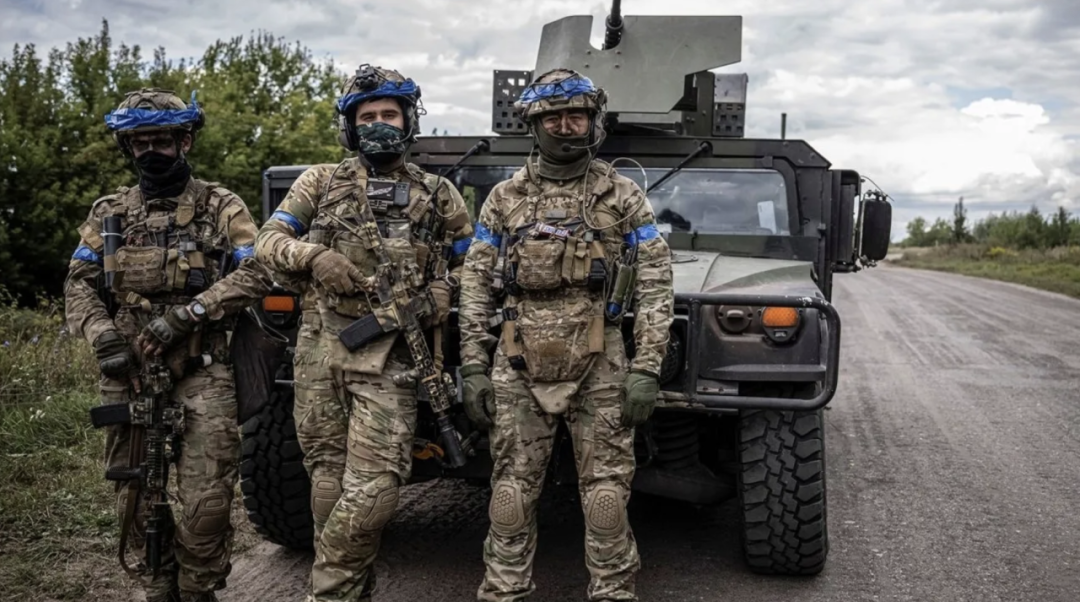
U.S. soldiers in front of the U.S. Hummer Hummer.
At present, the Ukrainian army has advanced 15-30 km in various directions in the Kursk region and is still advancing rapidly towards the north-west and north-east of the region. Reports issued by the Western Institute for the Study of the War of Think Tanks (ISW) indicate that, as of 11 August, Ukrainian troops were operating in the vicinity of 29 settlements in the Kursk region, whereas by 12 August the number had risen to 40. On 12 August, for the first time, President Zelensky of Ukraine acknowledged in social media that the Ukrainian Army was attacking Russia itself; on the same day, the Commander-in-Chief of the Ukrainian Army and also the Commander-in-Chief of this operation, Sersky, declared that the Ukrainian Army had control over at least 1,000 square kilometres of Russian territory. According to numerous reports, this number exceeds the territory of Ukraine occupied by the Russian army since May of this year in a new campaign in Kharkov.
As of August 12th, the pattern of Ukrainian forces offensives, in which the blue shadows are part of Ukrainian forces-controlled Russian territory and the blue dots are active Ukrainian forces units
The war reports issued by the War Research Institute indicate that during the night of 11 to 12 August, the Army carried out a drone attack on the Russian airbase in Moscow. On 12 August, the Bergorod region, south of Kursk region, was similarly subjected to cross-border attacks by Ukrainian troops.
The Russian State Counter-Terrorism Committee has announced the implementation of the “counter-terrorism regime” in the two cantons and in the neighbouring region of Bryansk, and Russian President Vladimir Putin has asked the Russian Ministry of Defence and the Border Service attached to the Federal Security Service “to ensure reliable coverage of the State border”. According to Putin, the main task of the Russian Ministry of Defence is the expulsion of Ukrainian troops from Russian territory, while the Russian Border Service carries out “its own combat tasks”.
It is reported that Putin and Russian seniors appear to be preparing to integrate border and military forces in the Kursk region and to establish a joint command mechanism to respond to the Ukrainian offensive. While the integration of the first-line forces has been as slow as possible, the Russian forces are mobilizing reinforcements from multiple fronts, and since 10 August, reinforcements have been made to Kursk by brigades drawn from the direction of Khelson, Zaporoje and Kharkov. It is worth noting that at present Russian officials do not officially characterize the operation as an “invasion”. On several previous occasions, the Russian side has made high-profile claims that the invasion of Russia's mainland will be met with severe reprisals, including nuclear strikes.
Houses hit in Kursk
The Russian Ministry of Defence, in its statement after the outbreak of the fighting, stated that 300 members of the Ukrainian army had entered Russia, and that the number had been revised to 1,000 as the fighting evolved. However, according to the analysis of available sources, there are at least four to five brigades of Ukrainian army forces entering Russian territory, dominated by the Mechanized Infantry Brigade, and some of the military organizers claim to have an equal number of troops on standby on the side of the Ukrainian territory, ready for reinforcement; according to the size of the force, at least 30,000-40,000 troops on the ground were mobilized during the operation. In addition, the Russian side reported that the Ukrainian Army had also used the OTR-21 “Circular Point” tactical ballistic missiles, which were its own few long-range ground firing tools, while the Financial Times reported that the Ukrainian Air Force ' s Su-27 fighters were also involved in ground support. The above-mentioned facts show that the attack was not a tactical attack or disturbance, but rather a long-planned strategic operation.
Conjecture of the purpose of the battle
In February 2024, the Commander-in-Chief of this operation, Serski, was just promoted from the Commander of the Ukrainian Army to the Commander-in-Chief of the Ukrainian Armed Forces. Unlike his predecessor, Zaluzz Zaluzzi, who was good at strategic and proactive action to break the battlefield deadlock through a highly covert raid, in 2022 Kharkov ' s counter-attack was a well-known example of his commanding career, under which the Ukrainian army, by its wing, had broken the Russian army cluster surrounding Kharkov and pushed it back to the borderline. The attack is also highly personal, and the entire operation is highly confidential and until now unknown to the outside world as to the true size of the attacking force, its tactical objectives and its staged thrust.
In interviews with front-line soldiers, the Financial Times revealed that the soldiers participating in the operation were not informed of their intention to cross the border until a few days before the attack began, while Germany, Ukraine ' s main ally, and the United States, similarly, indicated that they had not been informed in advance, and that the Ukrainian Government had officially admitted that the Ukrainian army had entered Russia almost a week after the operation had begun.
On 5 August, in the Donetsk area, a clandestine build-up of Ukrainian forces troops in an American M113 armoured transport vehicle
Although it is difficult to extrapolate the tactical objectives of the operation until the front is stabilized, the strategic objectives of the operation have already been defined by a number of parties at the beginning of the week.
Taking strategic initiative
Since the second half of 2023, the Army has been seeking a strategic counter-attack aimed at recovering the lost land and eliminating the Russian army as far as possible; however, in the face of the fortified eastern Ukraine line and the dominant Russian army, its counter-attack plan has failed and the two sides have remained in confrontation on the main front. Since May 2024, however, the Russian forces have resumed their attacks on the Kharkov region and, depending on the strength of numbers and fire, have encroached on the army in the eastern Ukraine region, where the war level has begun to tilt again towards the Russian side. In this context, the re-emergence of strategic initiative is necessary for the army.
Moreover, the nature of the equipment available to the Army allows it to take advantage of the “mony race in the field” during offensive operations. Although the Russian army lost most of its precision-guided weapons and high-tech weapons during the offensive of 2022, it was able to cover its positions with unguided bombs/bombs and large low-cost drones, destroying its valuable technical weapons, relying on Soviet-era stocks and ammunition support from countries such as the Democratic Republic of the Congo and Iraq, as well as its large force.
On the current main front, such positions are often fought with more firepower and manpower, and it is difficult for the UA-equipped Western weapons to take advantage of their intelligence, reconnaissance, mobile movements, etc., even though the firepower of a single piece of equipment is not lost to the Russian army, the numbers are, after all, too small. The Financial Times quoted a soldier from the Soviet Army as saying: “It is much more difficult to fight in defensive positions... The enemy knows us as well as they know where we are and their drones can see every move we make.” Thus, as in the case of this offensive operation, intelligence and investigative advantage are used to find the Russian side ' s defence weaknesses and to use these weapons in almost one-sided and transparent battlefields to maximize their effectiveness.
The Ukrainian Air Force has taken over the first American F-16. Machine
Looking for symmetry.
Previously, because of Western concerns about the escalation of the war, the U.S. was required to adhere strictly to the “no attack on Russia's mainland” political red line, and only the “free Russian army” had conducted small infiltration operations on Russian territory. Since May this year, as a result of the tight fighting in Kharkov, Western countries, led by the United States, have begun to relax this position by allowing Ukraine “flexible” to use weapons such as rockets against targets in Russia, but still not allowing them to use long-range weapons such as the Army's tactical missile system (ATACMS) to attack deep Russian targets.
The insistence of Western countries on this red line has created asymmetrical rules of engagement militarily, causing great damage to the Soviet Army, which can launch long-range weapons into its territory without fear of being hit by them. For example, the Russian Air Force ' s S-34 fighter bombers regularly ejected glide bombs inside the State border against the positions of the Army and kept their entire trajectory within the State border in order to avoid attacks by the Army. Zelensky also stated in a statement on 12 August that in recent months Russia had launched more than 2,000 attacks from the Kursk region, using anti-aircraft missiles, howitzers, mortars and drones to attack Ukraine, and had dropped 255 glider bombs and more than 100 missiles.
U.S.-made Strake infantry fighting vehicle damaged during the attack
By this offensive, however, the Army has broken the absolute limit of the rules of engagement, not only demonstrating that the Russian army's advantage in carrying out asymmetric attacks on the national territory has disappeared, but also demonstrating, through high-profile displays of weapons such as the US-aid Strake and the German-aided Weasel infantry, that its main Western allies are no longer committed to the old political red line, and that since then, any aspect of the long border line between the two sides may have been targeted by the Soviet forces.
Take control of Russian forces and ease the pressure on eastern Ukraine.
Since the beginning of the summer of 2024, the Army has faced strong Russian offensive pressure on the eastern front. The Russian army has continued to carry out heavy attacks in the Donetsk area and has taken over successively multiple positions of the army. The situation in the Pokrovsk region, in particular, has been extremely unfavourable to the Ukrainian side since July, and the army is facing a shortage of personnel and ammunition at a time when foreign aid is six months late and a year of war has lasted. Therefore, all parties believe that this attack on Russia's mainland will, to some extent, attract Russian forces to draw the main forces of the front line back, thereby reducing the pressure on UCD. This view is confirmed by the fact that the Washington Post quoted a senior Ukrainian official.
However, it does not appear that the war has developed as much as the UCPS expected. According to the information available, the Russian forces, which have been returning from the front lines since 10 August, have come mainly from the direction of Khelson, Kharkov and Zaporoje, which are the least intense areas of fighting between the two sides, and have drawn troops from these areas to show that the Russians do not want to be taken advantage of on the main fronts. On the eastern Ukraine front, however, Reuters reported that on 11 and 12 August, the offensive of the Ukrainian army on the Donetsk front had not diminished, that the Russian army had advanced south-east of Toletsk and had surrounded the Ukrainian army stationed in the village of Niu York, where the situation was precarious. According to the Associated Press, Ukrainian General Staff 13 indicated that, within the past 24 hours, Russian forces had launched 52 attacks in the Pokrovsk region of Donetsk region, about twice the average number of attacks a week earlier.
Pro-Russian forces on the Donetsk front.
Increased leverage for possible political negotiations
Since the defeat of the counter-attack in 2023, the Russian-Ukrainian front has shown stability for a long time, behind which war inputs and economic losses on both sides have continued to grow. And Russia’s powerful potential for war, inherent in its vast size and combined power, is being unleashed, and if the current stalemate is maintained for a long time, the probability of war will probably go in a direction that is detrimental to Ukraine. As a result, various parties have begun to call upon the Russian and Soviet sides to enter into negotiations to resolve the dispute politically. CNN had previously reported that Ukraine would find itself in a more difficult situation as the uncertainty of the war had widened and Zelensky had begun to relax his negotiating position, and when he was once again in the White House in the general election this year.
In historical practice, discussions between the negotiating parties around geographical boundaries, such as the ceasefire line, have mostly revolved around the existing line of control, so that if the armistice negotiations take place in the near future, Ukraine, where 18 per cent of its territory is occupied by the Russian army, will be extremely passive. Although the spokesman of the Ministry of Foreign Affairs of Ukraine has made it clear on 13th that “no occupation of Russian territory is sought” and that the attack is only aimed at ensuring security in Ukraine, it would undoubtedly help the Ukrainian side to increase leverage in possible negotiations if a part of Russian territory could be controlled or threatened at this time. The Washington Post quoted Mikheilo Bodolia, Adviser to the President of Ukraine, as saying: “Any military action on Russian territory may be conducive to the upgrading of Ukraine's position in future negotiations with Russia to end the war”.
Ukraine Peace Forum, Switzerland, June
At a time of rapid warming in the Middle East, there has also been a significant shift in the international volume of noise that had been concentrated on the situation in Russia and Ukraine, and the degree of interest and confidence of Western allies in Ukraine has declined to varying degrees. At this time, a highly political offensive has undoubtedly drawn some of its attention back to Ukraine, and the Swedish media quotes a responsible think tank: “Ukrainians are trying to change the narrative of the war... Before the attack on Kursk, it was felt that the war had become quite predictable and, in many respects, had been considered frozen. As a result of this attack, Ukraine has actually proved successfully that there is indeed room for them to make this war unpredictable and capable of surpriseing Russia.”
The red line that keeps coming back?
The U.S. side, represented by the U.S., was not surprised by the fact that the U.S. had clearly crossed the “political red line”. Two days after the attack, the United States Government stated that it had received no prior notification from the U.S. side at all, but that the operation was within the “acceptable limits” of the United States. The spokesman for the United States Department of State, Matthew Miller, stated that Russia had launched an attack on Ukraine from the Kursk region and that the United States therefore supported Kiev in exercising its right to self-defence. The Washington Post quoted the Pentagon spokesman Sabrina Singh in a press conference saying, “When the army finds that the attack on the border is coming from the other side of the border, they must be able to respond”.
Senator Richard Blumenthal of the Democratic Party of Connecticut and Senator Lindsay Graham of the Republican Party of North Carolina reportedly visited Ukraine on 12 August to express their support for the operation. Graham, from the United States Air Force, a Ukrainian supporter of the Republican Party, said to journalists after his meeting with high-ranking officials such as Zelensky that the Kursk operation was “bold, wonderful and beautiful”.
Zelensky met visiting Senator Lindsay Graham and others.
According to the Washington Post, Polish Prime Minister Donald Tusk, who had long supported Ukraine, also stated on 6 August that he supported Ukraine ' s action, but that officials in Kiev had not consulted him on the matter in advance. According to Tusk, “the actions of the Russian army and air force on the territory of Ukraine bear the symbol of genocide and inhuman crimes, and Ukraine has the right to wage war in order to paralyse Russia's aggressive intentions as effectively as possible”. A similar view was expressed in the interview by the spokesman of the German Ministry of Defence, who stated that the aim of his aid was “to support Ukraine in its defence struggle against Russian aggressors”, and that Ukraine “has the right under international law to defend itself against these (cross-border) attacks”.
However, as the first country to provide military assistance to Ukraine, the United Kingdom once again rejected Ukraine's use of the joint British-French “Shot Shadow” cruise missile in Kursk, which, according to the Kyiv Post, had been proposed by Zelensky during his previous visit to the United Kingdom, but which was rejected by the British Prime Minister. The Minister of Defence of Ukraine stated that he was in contact with the French authorities to obtain authorization for their use. Similarly, the use of the Army ' s tactical missile system (ATACMS) to attack Russian targets has not been allowed, despite the United States high-level acquiescence in this ground offensive. From the perspective of the world, the Western countries, despite their repeated concessions on the political red line of “enabled attacks on Russia proper”, are still concerned about the possible political implications of long-range weapons.
Trump's campaign partner, Vance, is tough on the end of U.S. aid.
Moreover, despite the fact that the Democrats have succeeded in catching up with the Republicans in large-scale polls through, for example, a change of face, the final results of the general elections are still uncertain this year, with dramatic events. According to POLITRICO News Network, several Ukrainian officials expressed a sense of urgency to improve the situation on the battlefield before the November presidential elections. While Trump has not indicated that he will cut off absolute aid, his obstinate attitude, the current Republican group’s repeated obstruction of the U.S. aid bill, and his deputy, Vance,’s strong denial of U.S. aid have shown that if he is elected successfully, Ukraine will be struggling to get even more US aid.
Read the complete article in its original context.
Fudan Center for China–U.S. Cooperation · August 14, 2024 · Chinese
Open the original Chinese article