

Editor’s note This is a complete English translation of the published Chinese article, with publication chrome, image captions and account notices omitted. Facts, estimates and framing reflect the original publication date. The Chinese original remains available through the source link below.
It's unrealistic to expect Trump to settle the Russia–Ukraine issue once he talks with Putin.
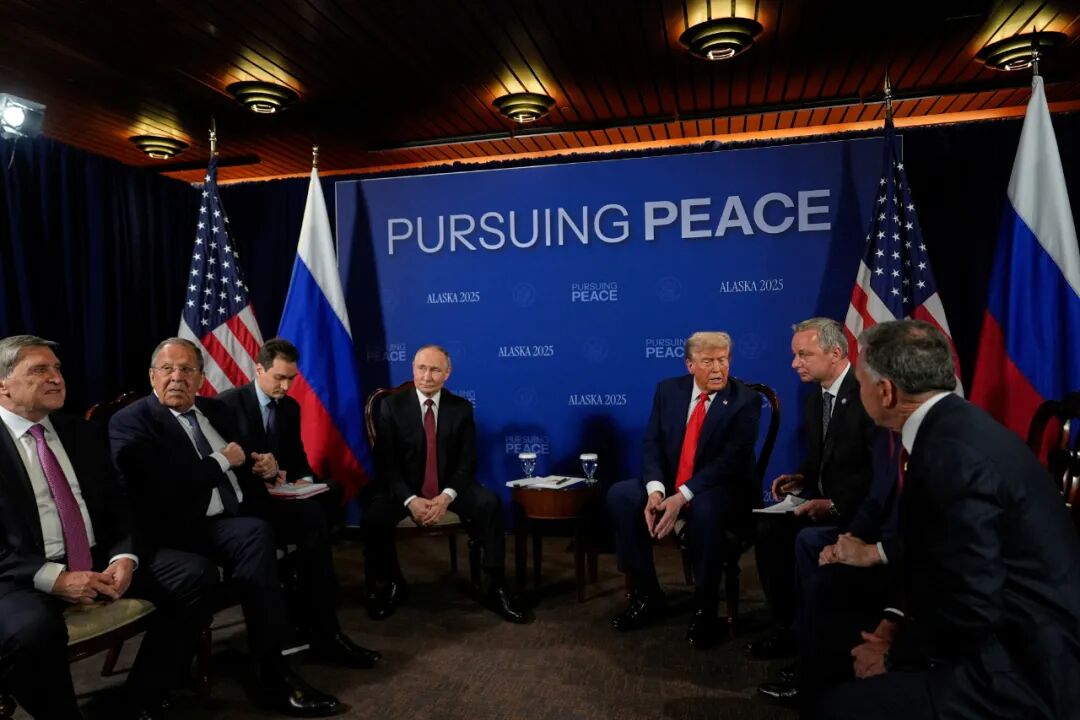
According to news reports, in the early hours of Beijing time, 16 August 2025, small-scale talks between United States President Trump and Russian President Putin were concluded in Alaska, United States. The parties met for more than two and a half hours.
The Special Representative of the President of Russia for Foreign Investment and Economic Cooperation, Dmitriev, stated that the negotiations between Putin and Trump were progressing well.
At the joint press conference held at the end of the talks, Trump stated that the parties had made great progress, that they had reached agreement on many issues and that there were few remaining issues, but one was important and that no agreement had been reached. Later, he will call President Zelensky of Ukraine and the leaders of the NATO countries, as well as those he deems appropriate, to brief him on the meeting.
Putin said that the talks were “complete and effective” and highly appreciated Trump's efforts to resolve the conflict in Ukraine. Noting that the situation in Ukraine posed a “fundamental threat” to the security situation in Russia and that a permanent agreement “must eliminate the root causes of the conflict”, he agreed with Trump that “security in Ukraine should be guaranteed”.
Putin concluded by stating that he had established a credible link with Trump, and specifically recognized a possibility that Trump had always stressed externally: If Trump was President when the Russia–Ukraine conflict broke out, there would be no war.
Behind Alaska:
Putin's sense of security and Ou's anxiety
On August 8, 2025, the date of the “ultimatum” which Trump had originally called for a ceasefire in Russia, the United States suspended sanctions against Russian threats when Trump announced that Putin would be invited to a bilateral meeting in Alaska on August 15.
This location was somewhat unexpected. Prior to his meeting with the President of the United Arab Emirates on 7 August, Putin had stated that the United Arab Emirates was a “very suitable” place. Often, the parties to the conflict tend to choose a third party rather than a “home” for one of them as the venue for the negotiations in the absence of any clear prospects for negotiations, so as not to cause embarrassment in the face of too many factors, while countries in the Middle East, such as Saudi Arabia and the United Arab Emirates, are willing to host the US-Russian negotiations out of the need to increase international influence.
Security may be an important reason why Russia ultimately chose Alaska. Since Putin is still wanted by the International Criminal Court, there is a certain risk that he will travel or transit any State party to the Rome Statute of the International Criminal Court (hereinafter “the Rome Statute”). As the United States withdrew its signature of the Rome Statute at the beginning of this century, and the route from Moscow to Alaska did not require transit to third countries, Alaska became the least risky option for Putin. As a result, Putin's key diplomatic adviser, Yuri Ushakov, claimed that he was a “fully logical” forum for the summit in Alaska, because “our delegation needs only to leapfrog the Bering Strait”.
In addition to pragmatic security considerations, two metaphors behind the site of the meeting in Alaska, according to the Guardian's analysis, have made Russia feel secure: first, Alaska is a land sold by Russia to the United States, which symbolizes an agreement between Russia and the United States on the attribution of territory through “agreements”; and secondly, Alaska is geographically far from Europe and Ukraine, none of which has been invited to participate in this meeting, which reinforces the possibility of European and Ukrainian marginalization in the peace talks.
The White House initially set Zelensky’s meeting with Putin as a precondition for its summit with Putin, but Trump quickly changed his line and defined his meeting with Putin. Despite the fact that, following the announcement of the meeting in Alaska, senior officials of the White House, through media outlets such as NBC, reported that the White House was considering inviting Zelensky to visit Alaska, Trump himself had not made a clear statement.
Europe, which also played an important role in the Russia–Ukraine conflict, was not invited at all. Europe and Ukraine, which felt marginalized, organized an online Foreign Ministers meeting on 11 August. Prior to the talks, European leaders such as France, Germany and the Chairman of the European Commission, von von der Leyen, issued statements that âthe path of peace in Ukraine cannot be decided without Ukraineâ.
The EU hopes to harmonize the position of Western countries before the official talks between Putin and Trump. At the invitation of German Chancellor Merz, President Zelensky of Ukraine visited Berlin on 13 August to hold a videoconference with European leaders such as German Chancellor Merz and United States President Trump.
The meeting reached five consensus points on the principle of negotiations with Russian President Putin, essentially re-emphasized the previous European and Ukrainian positions: the Ukrainian side must be directly involved in a peaceful settlement of the Russian-Ukrainian conflict, everything pertaining to Ukraine can only be discussed with the Ukrainian side, preparations should be made for the convening of the US-Russian tripartite talks, there must be a ceasefire and a clear guarantee of security for Ukraine, and Russian sanctions should be strengthened if the Russian side does not agree to a ceasefire.
The battle line is loose and the cry for peace is coming.
Whenever major negotiations take place, the Russians and the Russians are always pressing for a breakthrough on the front line and fighting for time to gain leverage for themselves at the negotiating table, which has become a practice for almost three years, and this Russian-American summit is naturally no exception.
A combination of multiple media reports indicated that Russian forces on the Donetsk front had launched large-scale infiltrations into Ukrainian forces positions since 12 August and had moved in the direction of Dobropilia. According to the Ukrainian battlefield monitoring organization Deep State, the town is located 20 kilometres north of the strategic area of Pokrovsk and has been the main target of the Russian army for a year.
Zelensky confirmed that the Russian army had advanced about 10 kilometres in several directions, “without heavy equipment and carrying light weapons with them. We have found some of our enemy forces, some of which have been eliminated and others captured. We will soon find and destroy the remaining enemy forces.” He stated that the Russian army had also launched an offensive in the direction of Zaporothe, which was part of Moscow's attempt to shape a pattern of public opinion in the run-up to the US-Russian summit to show that Russia “is moving and Ukraine is failing”.
At present, the Russian army has not yet established itself in the region, and the United States Institute of War Studies (ISW) has assessed that the current tactical progress of the Russian army is still difficult to assemble as a breakthrough at the “operational” level, and that its ability to make significant progress in the north and north-west of Pokrovsk remains critically dependent on the actions of both sides in the coming days. For Ukraine, however, the “a little looseness” of the front line is a problem that cannot be ignored.
After no significant progress was made in the large-scale offensive by both sides, the two sides had to confront each other in the “treads” that had operated in eastern Ukraine for many years, but in the face of an overall shortage of manpower, the army's defence was not always complete; on the point of weakness of the line, the Russian army often needed only “a few successs”, and the army needed to ensure that “no loss”.
It is reported that a former UA officer publicly warned Zelensky on social platforms that “Mr. President, to be honest, I do not know what you heard, but I would like to tell you that the situation (near Pokrovsk) is, without exaggeration, a mess.” He also stated that “the front line is in fact `none'”.
This “no-existent” situation was explained by a front-line source: in the Pokrovsk area, the Ukrainian Armed Forces fortifications consisted mostly of two positions and were supplied only by drones. Owing to the presence of drones, the battlefield is no longer two long, face-to-face trenches, but consists of a series of mostly hidden, isolated and smaller outposts with a limited number of infantry stationed in each outpost. Such a posture would greatly facilitate multiple, multi-wheel infiltrations by the attacking party, using large numbers of manpower, which, without taking into account the number of casualties, would dramatically increase the probability of penetration success, as has been the practice of the Russian army for a year of “branding” the U.S. line.
Despite public data indicating that the war damage ratio between the Russian and Ukrainian sides as a whole is still the best in Ukraine, as the Russian army continues to stabilize its lines of defence using its manpower advantage, several attacks by the Ukrainian army have failed to regain its initiative, and the loss of manpower and morale caused by the continued “infiltration” of the front line continues to accumulate, putting pressure on the Ukrainian side.
In the event of a war, the flames in all their aspects can cause a shock in the overall situation. On 22 July, Zelensky signed a decree seeking to place the State Anti-Corruption Agency of Ukraine (NABU) and the Special Anti-Corruption Prosecutor ' s Office (SAPO) under the leadership of the Prosecutor General. This move, which has been interpreted by various national and international parties as “a weakening of the independence of the main anti-corruption bodies”, soon triggered the first massive protest against the Government since the outbreak of the conflict in Kyiv, Lviv and Odessa. Following pressure from domestic public opinion and the European Union, Zelensky quickly withdrew the decree on 31 January, but the overall state of subjugation at the level of Ukrainian society is evident.
On 7 August, the latest poll in Gallup showed that the confidence of the Ukrainian population in the quick war victory had been significantly reduced, that there was widespread dissatisfaction with Washington and that there was no hope for rapid NATO accession. According to the report, more than three years after the outbreak of the war, the support of the Ukrainian population for “continue fighting until victory” fell to a new low of 24 per cent, while 69 per cent of respondents expressed support for a negotiated end to the war as soon as possible.
By contrast, at the beginning of the conflict in 2022, 73 per cent supported “continuing fighting until victory”, while only 22 per cent hoped to end the conflict through negotiations as soon as possible, and the rate of support in both programmes almost reversed.
However, in the Russian-American hot “territory exchange”, the mainstream public opinion in Ukraine remains that it does not give up any territory. On 9 August, Zelensky issued a statement stating that “the answer to the territorial question of Ukraine is already contained in the Constitution of Ukraine... Ukrainians will not hand over their land to the occupier”.
Since the beginning of the war, Zelensky's position has been the “1991 border” at the time of the restoration of independence, including Crimea, and will never recognize the occupied territories as belonging to Russia. For Ukraine, which had been fighting for three years under the call for the “retribution of territory”, it was difficult for any party in the country to relax its position on sovereignty.
Three core contradictions remain to be resolved:
Ceasefire, territory and sanctions
Trump’s previous meeting with Putin in Alaska was described as a “probative meeting”, i.e. no substantial expectation of a negotiated outcome. Following the announcement of his meeting with Putin, he said at the White House press conference that “it might be possible to discuss territorial exchange with Putin”, while indicating that Russia occupied some “very important territories”, but that “we will try to recover some of them”.
This was not the first time that Trump had proposed a “territory exchange”, which he claimed was “both favourable to Russia and Ukraine”. For Trump, achieving a ceasefire is a central claim and an important indicator of its commitment to the electorate, but Russia is firmly bound to other conditions.
Prior to this meeting, Trump's Special Envoy, Witkov, met with Putin, who proposed a “territory for ceasefire” proposal: According to European officials, Putin demanded the complete withdrawal of Ukrainian troops from the Donetsk region (currently, the Ukrainian army still controls a quarter of Donetsk) and a ceasefire in line status quo. In exchange, Putin will no longer insist on the complete withdrawal of the army from the four states currently occupied by the Russian army, particularly the Khelson and Zaporoje regions, where the army remains steadfast.
However, Ukraine's European allies are somewhat obfuscated about the territorial issue: while European leaders have repeatedly reaffirmed their commitment to Ukraine's territorial integrity in joint statements, Europe has not seen the territorial issue as “non-negotiable”. In an interview with ABC in early August, NATO Secretary-General Rutte stated that the territorial issue “must be put on the table in the negotiations”, suggesting that Ukraine needed to acknowledge that it had lost control of parts of the territory but would not formally relinquish its sovereignty over them.
In a sense, Rutte's statement suggested that even though territorial issues were difficult to compromise at the political level, in actual negotiations Europe and Ukraine could only accept de facto results and bargain on the basis of existing de facto zones.
Finally, on the issue of sanctions, it is equally contradictory that Trump will compromise and how it coordinates with its allies.
In previous negotiations, Russia had made the lifting of sanctions one of the conditions for a ceasefire, and Trump had raised the threat of “sub-tariffs” on countries buying Russian oil only after Russia had stepped up its front-line offensive, out of a desire not to further fuel Russian-American tensions, and without cooperating with the EU to continue increasing its sanctions against Russia.
On the European side, sanctions have been used as leverage to compel Putin to act. German Chancellor Merz issued a statement on 10 August, stating: “Putin can only act under pressure. It is clear that military pressure is not strong enough and that United States sanctions have not yet been imposed. If implemented, the impact on Russia would be enormous, and I have been urging the United States to do so.”
On the issue of sanctions, Ukraine and Europe have been insisting on “enhanced sanctions in exchange for peace talks” and Russia has been calling for “the lifting of sanctions before a ceasefire”, while Trump has been in an awkward position, because a ceasefire must be agreed with Russia, while lifting sanctions requires European cooperation, but the strong differences between the two over territory and the ceasefire make it difficult for the United States to find a mutually satisfactory outcome.
On the whole, this Russian-American summit of heads of State is more like a more hasty one, in the context of Trump’s “ultimatum of 8 August” – without any landmark results before the level of work. For Putin, Trump, and Zelensky, the problem is the same: they all need a “winner,” but for these three, any agreement that can now be reached is hardly a victory for what they have already paid. In this context, it is also unrealistic to expect that the current problems in Russia will be resolved through a summit.
Read the complete article in its original context.
Southern People Weekly · August 16, 2025 · Chinese
Open the original Chinese article